Two hours to design triage—and most of the work was defining limits
sana1 min read
A hackathon at Di Tella asked how AI could help where the nearest specialist is six hours away. Our answer was defined less by its features than by the lines it would not cross.
The brief at the Universidad Torcuato Di Tella hackathon stated that some provinces are a six-hour journey from a specialist and that Latin America has roughly one doctor for every five thousand people. We had two hours, in teams of three to five, to design and pitch a response. One constraint was explicit: not an appointments app. The problem began when no doctor was available and somebody needed guidance now.
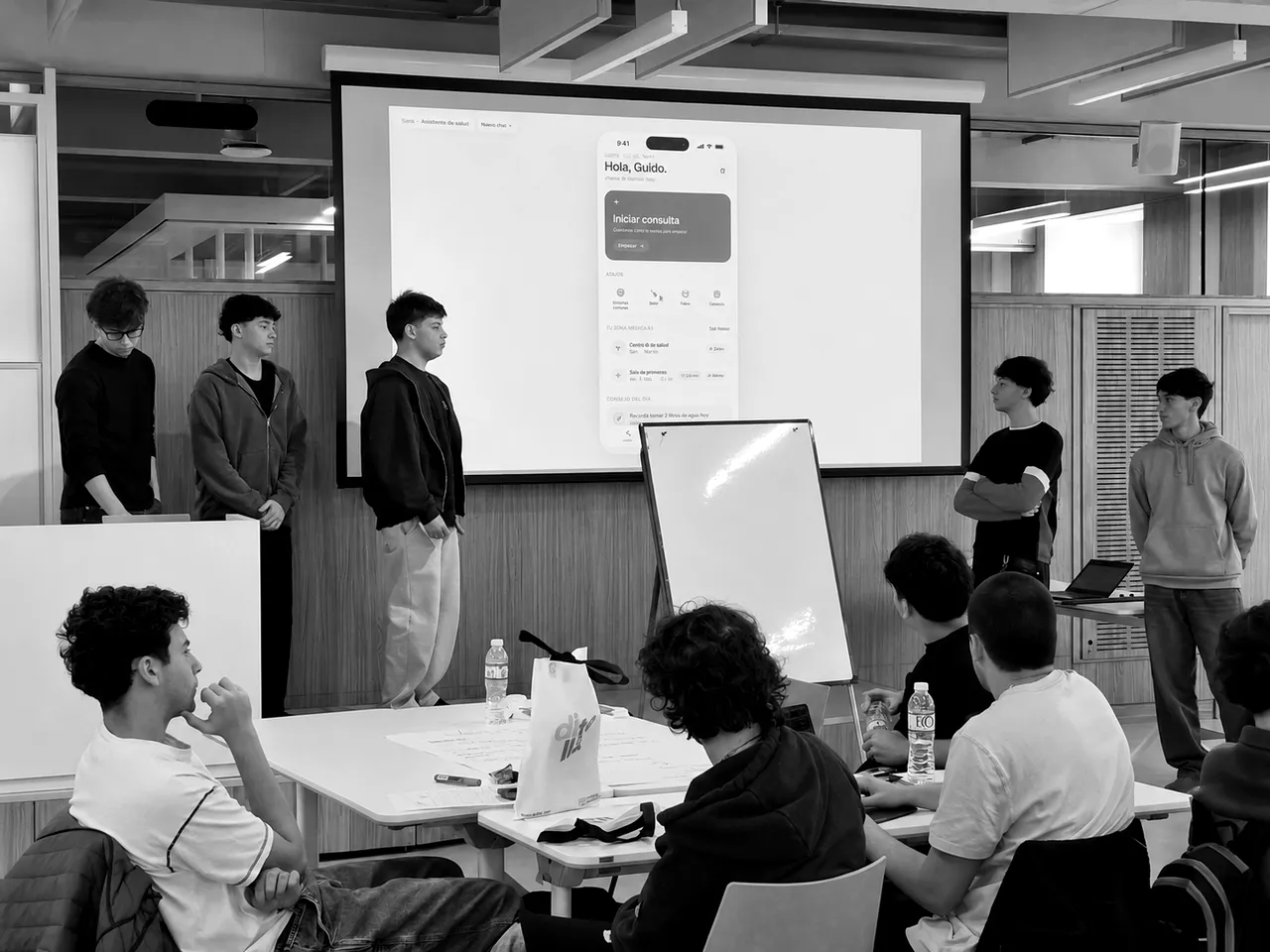
Our answer: triage, not diagnosis
We proposed Sana, a chat that would ask narrowing questions — closer to Akinator than to a form — using symptoms, age, history and duration. It would return an orientation: possible causes, a priority level and what to do next.
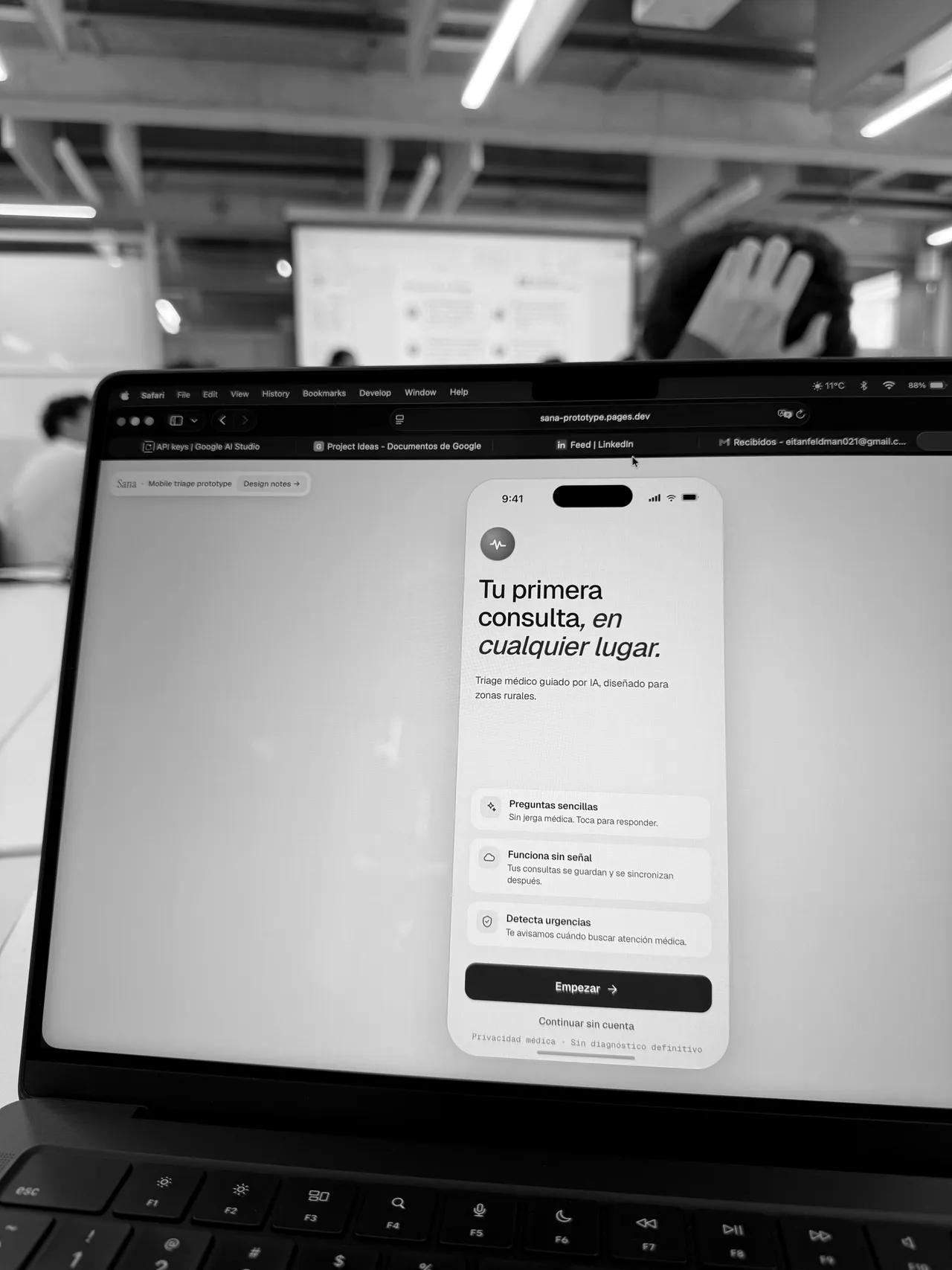
The decisions that were refusals
- It would not diagnose. Sana would orient and prioritise. An AI that says "you have X" where no doctor can challenge it is worse than no answer.
- Escalation to a person would not be optional. Chest pain, trouble breathing, fainting, seizures or high uncertainty would lead directly to human care or an instruction to seek it immediately.
- It would not assume a good connection. Consultations would queue offline and sync later, and the system could be used from a community health post rather than requiring everybody to have a reliable connection.
- It would not pretend responsibility belonged to the model. Clinical responsibility would remain with the health system and the professionals supervising its protocols, and every response would be labelled as preliminary guidance.
What we built — and what we did not
The team designed and pitched the concept, and Guido Jacofsky and I built most of the web interface prototype. It made the proposed patient flow tangible, but it did not make Sana a working clinical system. We did not build or validate medical triage; we built a prototype that showed how it could feel.
That is where Sana stopped. The prototype is still online, and the project is documented in the lab.
What I take away
With two hours, features are the easy part: any team can describe a chat that asks questions. The harder and more important work is deciding where it must stop. In healthcare, the boundaries are the product.